
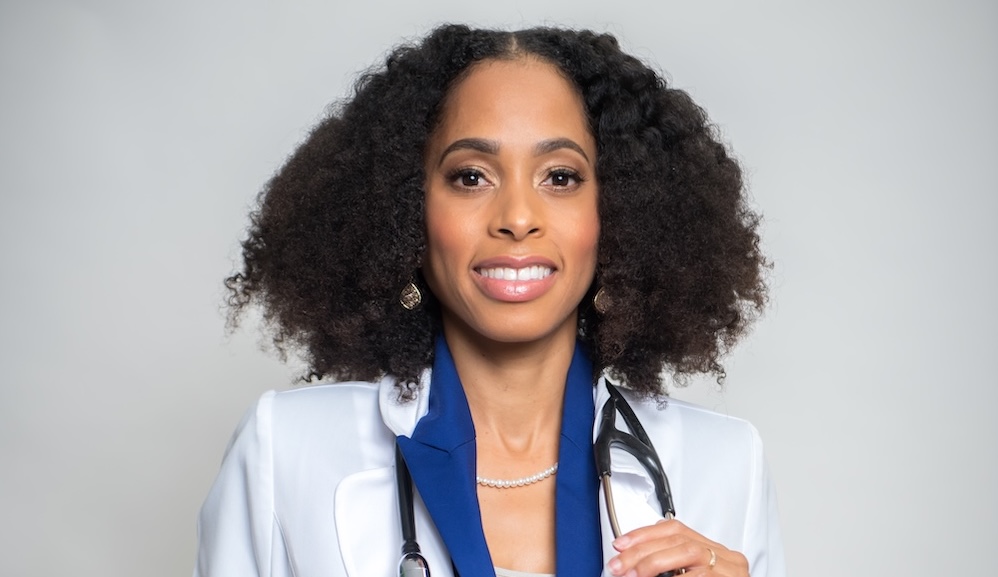
Ocean Rock Wellness was built with intention.
For Dr Sabrina Famous and Dr Ayesha Peets Talbot, it is not just a medical practice – it is a decade-long commitment to helping women find answers.
Ocean Rock specialises in root cause solutions and holistic treatment plans, and the doctors’ days are shaped as much by conversation as by clinical work.
Yet even with a decade of practice ownership under their belts and the results they see in their clients every day, there is still an age-old question that follows many women in medicine: do some people still see this profession as a man’s job?
In 2026, Dr Famous and Dr Peets Talbot say that perception has not disappeared. It has simply become more subtle, showing up in who is in the room, who is assumed to be the leader, and how women doctors are spoken to before their expertise is even considered.
For both doctors, the first major hurdle was getting accepted into medical school. They describe the pathway as demanding and competitive, with no room for drifting.
“When we first entered medicine, the main hurdle was getting accepted into a medical school,” Dr Famous said.
“It continues to be a competitive field of study; therefore, you have to be exceptional and be very focused in your high school and undergraduate studies.”
Pathways shaped by race and gender
Their routes into medicine were different, but the stakes were the same. Dr Famous remembers the intensity when she studied in Trinidad, her mother’s home country.
“The training in Trinidad was very rigorous and competitive,” she said. “We both felt the pressure to do our very best no matter what.”
Dr Peets Talbot was trained in the United States and recalls how early she understood that race and gender would shape the experience.
“From the minute I interviewed for medical school, I knew my race and gender were going to be a driving force for which I would attend,” she said.
She describes being caught between two systems, both shaped by race in different ways.
“At that time, the majority of White medical schools were looking for a certain number of Black students to fill their minority quotas, and the historically Black medical schools were looking for the best minority students to continue to have a competitive rating as a school,” she said.
Years of training and experience do not eliminate stereotypes. They simply shift the form they take.
“The biggest stereotype we run into these days is looking young for our specialty and expertise,” Dr Famous said.
She recalls a moment at a corporate event that still makes her laugh. “One of the attendees said, ‘Geesh, you look so young, but you are old enough to be my mama!’”
Dr Peets Talbot knows the experience well. “I remember being constantly questioned about my age when I first started seeing patients on my own,” she said. “It is less of an issue now thanks to a little grey hair.”
They tend to respond with humour, and both say it is more of a compliment than an insult these days. But the broader pressure is the constant juggle of professional leadership alongside family life.
“The main challenge we find is juggling a medical practice and being a mother to small children,” Dr Peets Talbot said.
“Since we started Ocean Rock Wellness ten years ago, we have had five kids collectively.”
Asked whether the old idea still shows up in Bermuda, their answer is blunt.
“And those people are right,” Dr Famous said. “It is a man’s profession.”
Dr Peets Talbot agrees, pointing to what they see upon entering professional spaces.
“We have been to many classrooms, meetings and conferences and found ourselves to be amongst a sea of men,” she said.
“Yes, women are there, and sometimes are presenting and leading the conference, but the majority of the attendees tend to be males.”
They believe Bermuda reflects this too, in part because of the realities women doctors often carry outside the clinic.
“To some degree, we can see this in Bermuda,” Dr Famous said. “I believe that this is related to many of the women doctors in Bermuda juggling motherhood as well.”
Dr Peets Talbot added: “It is hard to position yourself as a leader in the medical community in Bermuda and juggling homework and bedtime routines.”
Staying power
Both doctors speak openly about applying their training to their own health, and about outcomes that surprised even them. Dr Famous recalls a time when she had very poor eyesight and was heavily dependent on her glasses but today does not wear glasses at all. Dr Peets Talbot remembers being told she would need glasses at 40 after laser-assisted eye surgery. Now in her 46th year, she notes her 20/20 vision is still going strong.
“We truly like to practise what we preach,” Dr Famous said. “The advice we give our clients is the advice we use in our everyday lives.”
Ten years in, they do not measure success by visibility alone. They measure it by staying power and by the change they see in others.
“Longevity,” Dr Peets Talbot said. “We are proud to still be here and relevant.”
Both doctors are aware of evidence, particularly in the US, showing Black women are more likely to be misdiagnosed, have their pain dismissed, or receive lower quality care. Their response is rooted in how they listen and how they build trust.
“As Black women ourselves, we understand this issue 100 per cent and we do not want to minimise the struggle that Black women have,” Dr Famous said.
“With the type of medicine we do, everyone that walks through the door is misdiagnosed,” Dr Peets Talbot said.
“Generally, until they meet and talk to us, they feel that they have never been given a clear answer to their medical symptoms or problems.”
For young Bermudian women considering medicine, it is not a fantasy.
“Firstly, be sure that medicine aligns with your true purpose,” Dr Peets Talbot said. “If you are clear on that, the path will be tough, but you will love it.”
